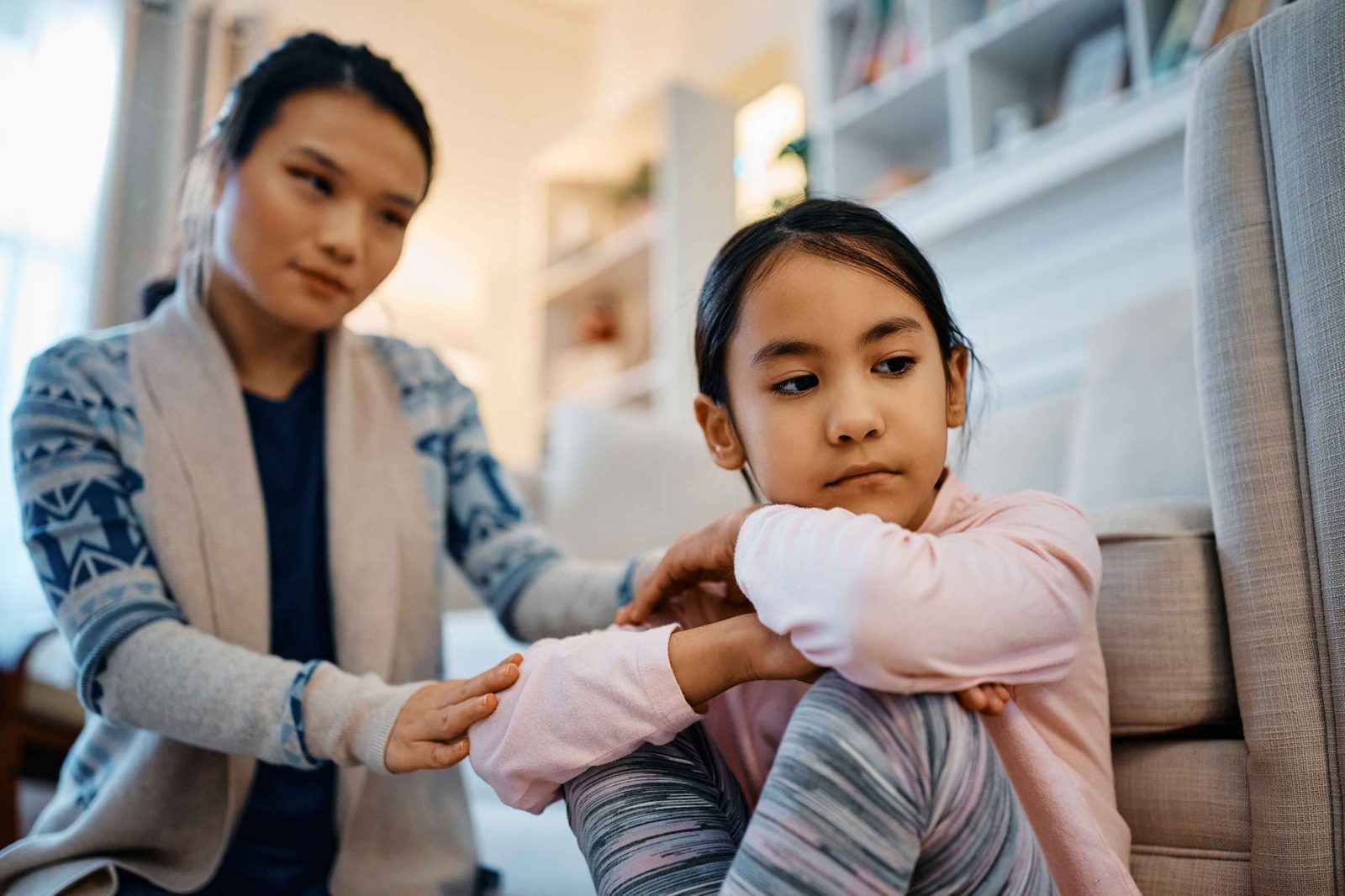
Sometimes a small thing is enough and there is a crackle in the air. An apple cut the "wrong" way, an unfulfilled wish, a lost game or a wrong word, all of this can trigger anger in a child.
The door slams, voices get loud and objects fly across the room. In such moments adults often feel helpless. Worry about the child mixes with helplessness, exhaustion and suppressed anger.
In this overwhelm, what is happening beneath the surface slips out of view. Children carry a nervous system that can be overwhelmed by stimuli, frustration and powerlessness. The anger is then not an attack on siblings or parents and not a sign of intent, but a cry for help. It is a shield for feelings such as fear, disappointment, overwhelm or sadness, for which the child lacks the words and the maturity.
One challenge for adults is not to become part of the outburst themselves in that moment. When anger meets anger, the situation escalates. In this state the child needs no return fire, no explanations and no lectures, because the brain is not reachable in that instant. What it needs instead is an anchor. It needs someone who can withstand the situation without judging and who signals that the feeling is allowed to be there, even if violent behaviour requires limits.
Giving this steadiness takes strength. It often helps to breathe, to let the shoulders drop and to remember that the situation does not have to be solved immediately. It is enough to be present, to ensure safety and to offer one's own calm. A look, a calm voice and the certainty that you will stay give the child orientation.
When the anger subsides, it gives way to exhaustion, tears or shame. This is where the space for connection opens up. A hug, staying close and words show the child that it is accepted with these parts of itself too. Through this accompaniment a child learns that feelings come and go without the relationship to its caregivers breaking.
Sometimes that is not enough, because the behaviour keeps coming back and one's own doubts grow. No one has to stay alone with this feeling or manage everything on their own. Seeking help is a possible step. It is often helpful to discuss challenging situations with someone who is not involved. Through this outside perspective, a small detail may be noticed that stays hidden in everyday life. Such an observation can bring about change in how a family lives together.