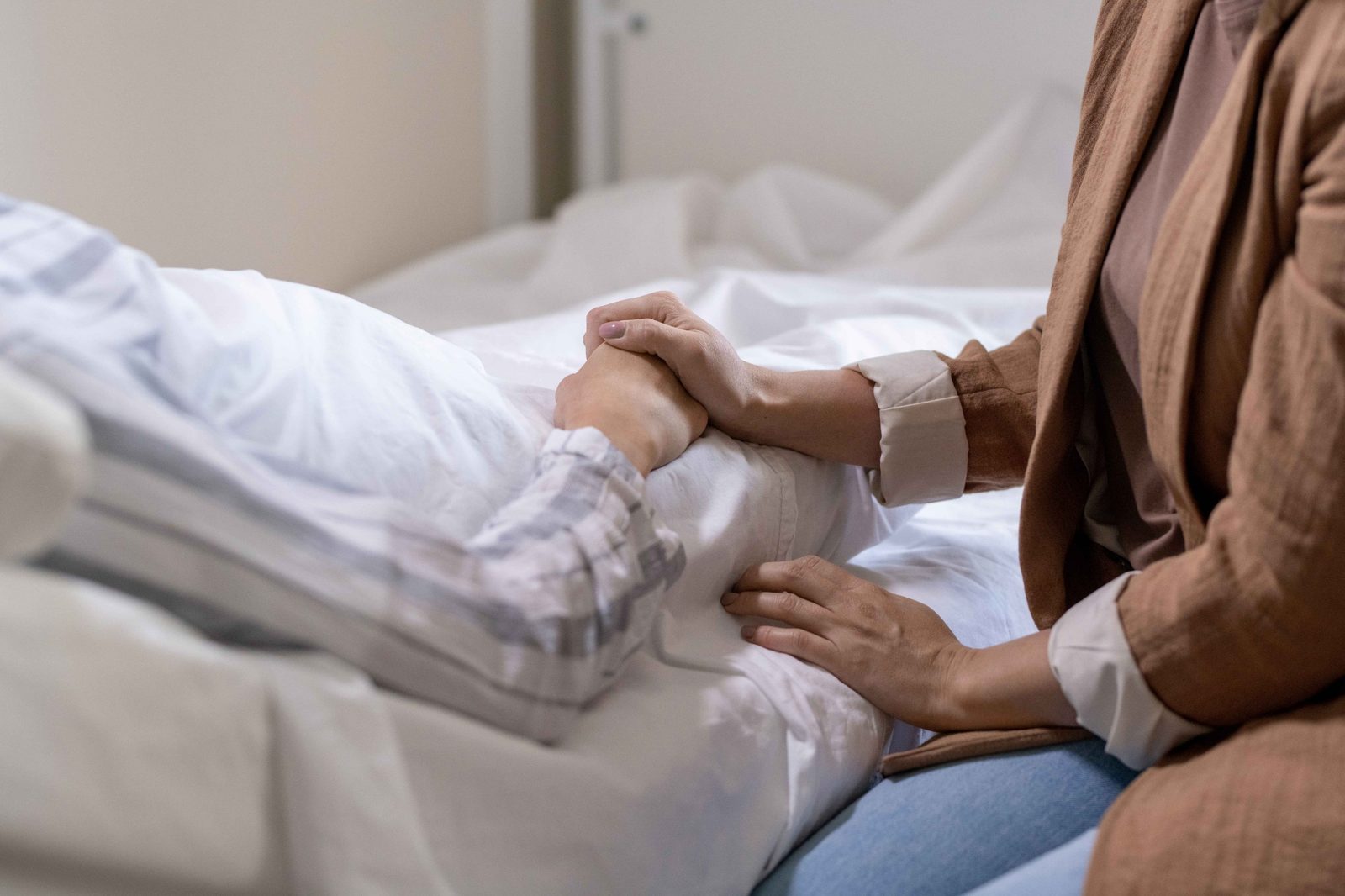
A diagnosis changes everything from one moment to the next. Not only for the person who falls ill, but also for those who love them.
Suddenly there is a fear that is hard to put into words, and alongside it the feeling of having to be strong. Often all attention is directed at the person who is ill, and that is understandable. But relatives carry a great deal too.
There is the worry that keeps you awake at night. There is the exhaustion from functioning. And sometimes there is also anger, overwhelm or the secret wish that it would all simply be over, followed by a guilty conscience.
Is one allowed to feel helpless when someone else is going through something so much harder? Yes. Helplessness, fear and grief do not mean that one is too weak or not grateful enough. They are a human response to a situation that is bigger than oneself.
Precisely because so much strength flows outwards, it is important not to lose one's own footing. Small breaks, an honest conversation, a place where one does not have to be strong. Those who are there for others may also care for themselves. That is not selfishness, but what makes it sustainable in the long run.
Sometimes it helps to talk to someone who is not involved. Someone with whom one does not have to protect or hold things together, but may simply feel what is there right now. A safe space in which one's own shock has room too.
No one has to carry this burden alone. Seeking support is not a sign of weakness, but of care, for oneself too.